Buscar

The New York Street

Un blog lleno de historias

Mens sana in corpore sano


No había escrito nada en el blog sobre las interminables mañanas de gimnasio en Lehman College, que empezaron cuando mi madre (siempre las madres) llegó a Nueva York en agosto del 2006 y con una sola frase me tiró al suelo: ¡ESTAS GOOOOOOOORDO!

Así que, empecé a comer mejor e ir al gimnasio. Hace mucho tiempo que no me metía en este tipo de rutina diaria. 30 ó 40 minutos de abdominales, carreras en la faja y un poquito de pesas. En Lima lo combinaba con un par de vueltas a La Molina en bicicleta, pero el clima en este momento no lo permite.

Al principio la idea era jugar tenis, pero una pequeña lesión en los músculos de la pierna izquierda, han impedido que me transforme de nuevo en el Agassi que yo era en mi adolescencia (bueno, exagerando. Un poquito. La verdad es que no jugaba tan mal a los 15…)

Regresando a Nueva York después del descanso de año nuevo, y gracias al empujoncito de Frances que es una water rat como yo, empecé a ir diariamente a la piscina temperada de la universidad. Qué placer.

Así que ahora, combinado con el gimnasio, tengo una excelente rutina de 7 a 10 vueltas cada tarde en la piscina olímpica (dependiendo del cansancio). No está nada mal. Uno se siente mejor al terminar de nadar, todo el cuerpo se relaja. Totalmente recomendable.

Claro que hay que seguir trabajando en el peso. Si bien estoy 6 kilos por debajo de lo que pesaba cuando mi madre me atacó con esa frase concluyente. Incluso hasta me bailan los jeans talla 31. Hoy en una revista vimos que el green tea ayuda a bajar el porcentaje de grasa, así que ese va a ser el próximo ingrediente de la dieta diaria, un poquito de té verde todos los dias.

Y ahora que el invierno-gracias al calentamiento global-está bastante moderado,y que la pierna se ha recuperado completamente de la lesión, estamos buscando unas canchitas de tenis en el Bronx para empezar con el raqueteo. Porque no hay deporte más bacán que el tenis, para jugar de a dos.

La mejor manera de empezar el año

Siempre pensé que la mejor manera de empezar el año era en una casita de madera frente al mar. O, en todo caso, en una carpita acogedora frente al mar. Siempre frente al mar.

Que sorpresa darme cuenta que uno de mis mejores fines de año, lo he pasado al lado de las montañas, bastante lejos del mar. Bueno, eso sí, en una casita de madera.

A Frances la conocí en mi clase de graduados en literatura inglesa. Ella es profesora de inglés en la universidad Bronx Community College de CUNY, graduada en educación de Columbia University y actualmente una indecisa que no sabe si hacer su doctorado en educación o en literatura (parece que literatura va adelante en las apuestas).

«La conocí vendiendo ají en La Parada» dice el valsecito criollo. A Frances la conocí mejor cuando la invité a bajar a la cafetería de la facultad a comprar un cafecito antes de la clase. La conocí mucho mejor cuando le pregunté (oh valiente yo) si conocía algún restaurante de sushi en el Bronx. Dio la casualidad que su restaurante favorito es uno japonés en su barrio, Riverdale. Da la casualidad de que uno de los barrios que me gustan más en el Bronx es Riverdale. Así que nuestra primera cena juntos fue un sushi en Palace of Japan en Riverdale. Nuestra primera película fue Volver de Almodóvar en el Lincoln Cinema y la primera vez que nos doblamos de risa juntos fue escuchando El Burrito Sabanero (Tuki, tuki tuki tuki) en un restaurancito de Riverdale.

A pesar de todas esas buenas coincidencias, no pensé que, apenas 12 días después de habernos conocido mejor (es decir: besado, etc, etc, etc) iba a pasar junto a ella uno de los mejores días de año nuevo de mi vida, en una casita de madera en las montañas (de Nueva York), conocidas como los Catskills Mountains, que si bien son una broma de tamaño frente a las cordilleras andinas, igual tienen su encanto.

La mejor mañana fue el desayuno de año nuevo, en la casita de madera, con unos delicados aperitivos en base a caviar y salmón ahumado y un sufflé que al parecer es la envidia de toda la región. El 2 de enero volvimos a NY, pasando antes por un pueblito que se hizo famoso allá por la década de los 70s: Woodstock.

Woodstock es lo más alucinante de la zona, con su colección de casas de hippies diseñadas y construídas por sus dueños, su festival de cine independiente y sus cafés que dejan respirar aire a libertad y a campo, a sólo una hora y media en automóvil desde la ciudad de Nueva York. Camino de regreso, pasamos por Ashokan, un gigantesco reservorio que es el principal surtidor de agua de la ciudad de NY y que parece un fabuloso lago artificial donde, previo permiso y licencia, se puede pescar truchas.

Así empieza el 2007, con una compañera que sonríe con los ojos, que prepara unos panqueques deliciosos, que se ha vuelto adicta a las tardes de natación en la piscina de Lehman y a los sandwiches de prosciutto en Little Italy en el Bronx; y que disfruta leyendo los argumentos de mi monografía sobre Ezra Pound y William Carlos Williams y se emociona cuando la llamo para decirle que encontré un paralelo entre Cien Años de Soledad y unas notas que encontré rebuscando en el diario de Mircea Eliade. Allí está el mar otra vez, alrededor de esta ciudad inmensa. Si no es el mar, es el agua de este río Hudson que veo ahora, en este atardecer desde la ventana de un apartamento en Riverdale, con el sol poniéndose en sus aguas templadas gracias a las temperaturas moderadas de este invierno de mantequilla.

Las mejores peliculas del 2006


La gran sorpresa de la semana pasada fue abrir el Village Voice y ver que entre las películas seleccionadas por los críticos como las mejores del 2006 estaba el filme rumano, la Muerte de Mr. Lazarescu, una pelicula oscura, brillante, que vi hace meses en una sala de cine arte en Manhattan. El Sr. Lazarescu es un pobre alcohólico amante de los gatos que vive solo, en un pequeño apartamento sucio y que se cae a pedazos, en un complejo habitacional para gente de escasos recursos en Bucarest. La película detalla su odisea desde que empieza a sentirse enfermo –horribles dolores en el vientre– hasta que la ambulancia viene a recogerlo y empieza su viaje al infierno por hospitales públicos de la ciudad donde nadie quiere hacerse cargo del destino de Lazarescu. Es una tragi comedia, donde lo más notable es la decadencia de los ambientes y del personaje principal, que va deteriorándose al mismo tiempo que el director enseña el deterioro de la sociedad que permite que Lazarescu realice este atroz periplo por los lugares que deberían proveerle la cura que necesita urgentemente.
Otro filme en la lista del Village Voice, con el cual estoy de acuerdo, es United 93, que es una excelente combinación de técnicas narrativas de ficción con el estilo de un documental.
A propósito de este número del Village Voice, realicé mi propia lista de los mejores filmes del 2006, que necesariamente incluyen muchos de los filmes que me llegan a casa en DVD gracias la magia y al buen servicio de Netflix. Una pequeña lista de los 15 mejores filmes que vi el año que pasó, y que recomiendo a quien quiera que le guste el buen cine:

1. Les Enfants du Paradise. TIENEN que ver esta película.
2. Double Indemnity, tal vez el mejor filme de cine negro, dirigida por Billy Wilder
3. O Brother, Where Art Thou?, 2000 Brillante épica, dirigida por los hermanos Cohen
4. I Vitelloni, 1956. Una de las mejores películas de Fellini. Excelentes diálogos y escenas imborrables.
5. 12 Angry Men, Uno de los mejores ejemplos de como filmar una gran película en una sola locación.
6. The Third Man, 1949. La actuación de Orson Welles es breve pero intensa.
7. United 93, 2006
8. The City of Lost Children, 1995 . Que gran ejemplo combinando magia y ciencia ficción
9. Delicatessen. La estética de la película es fabulosa. Te quedas pegado en los detalles.
10. Howl’s Moving Castle. Tal vez no es el mejor pero un muy buen ejmplo del cine de Miyazaki
11. Floating Weeds. Bellísimo filme de Ozu
12. Grand Illusion. Pertenece a la breve y sagrada línea de los filmes imprescindibles
13. The Apartment. Tal vez la mejor comedia romántica de la historia del cine. Dirige Billy Wilder
14. The Man Who Would Be King. Fabulosa adaptación de un cuento de Ruyard Kipling. Sean Connery magistral.
15. Ugetsu. el filme japonés que fue pionero en el realismo mágico en el cine. Extraodinario Mizoguchi.

Pardo’s Chicken New York. Semestre finito

A la Roca, Rossana Diaz le hicieron una reseña en la sección Luces de El Comercio del fin de semana. Su libro de cuentos Los Olvidados (no los de Buñuel sino los míos) se ha vendido como pan caliente en la feria del libro de Madrid. Y hasta ya le han puesto nombre a su estilo:neo bryceano.
El pollo del Pardo’s Chicken de Nueva York está buenazo. El chaufa también. Los anticuchos para chuparse el índice y el pulgar. Además queda a la vuelta del Lima`s Taste y del Chumley’s. Se puede uno decidir por el mejor cebichito de NY o el mejor pollo en la esquina de Cristopher St., antes de meterse a cualquiera de los huecos. Y el barcito Chumley’s es el lugar caleta y acogedor de siempre.
Esta mañana me pusieron una papeleta de estacionamiento. Anteayer pagué el que me clavaron hace dos meses en la casa de Alejandra. Todo por quedarme dormido una horita más. El que diga que es fácil tener auto en NY no sabe de lo que está hablando. O no le importa levantarse todas las mañanas a mover el carro ( y con suerte agarrar un espacio de vereda vacía no muy lejos) antes de las 8:30.
La venta de los chullos Parodi en la feria de Knollwod fue un éxito. Pero salieron más veloces las bufandas de Camargo. Juan se llevó cinco bufandas, la tía McHale se gastó cien dólares en chales y chullos.
La fiesta de Rachel fue tremenda bomba. Anotar: nunca mezclar vodka, ron , Cointreau y cerveza de San Francisco en una sola noche. Ls bocaditos estaban deliciosos y la música duró hasta las 5 y media de la mañana.
Acabo de recibir mi ensayo final calificado del curso de poesía: A. Y con esta nota de la profesora Patricia Cockram: Beautiful¡ I think you should submit this for an award. See the guidelines in February.
El trabajo se llama: William Carlos Williams under the influence. Borrowing from The Cantos to write the greatest American Epic.
Apenas le haga algunas correcciones que me ha indicado Cockram, publico el ensayo en el blog.
Básicamente, he encontrado varias referencias en el poema Paterson de WCW que son «tomadas» de Pound. Hay un montón de ritmo y música «prestadas» de T.S. Eliot. Pero eso es suficiente para otro ensayo. No estaría mal, si es que Williams no se hubiera pasado 40 años de su vida escribiendo Paterson y las últimas dos décadas criticando a Pound y a Eliot (dijo que The Waste Land era la mayor catástrofe de las letras de Estados Unidos. ¡Y lo copia descaradamente!)
Del curso de poesía lo más sorprendente–además de los poetas de siempre: Pound, Eliot, Yeats–, fue la lectura de ciertos poemas de WCW y de Mariane Moore. Creo que dedicamos muy poco tiempo a Wallace Stevens. Además era la última clase y había vino y bocaditos sobre la mesa…
¿Qué más? Cambié toda la ropa de cama. Por 87 dólares, cubrecama, sábanas, cobertor de 4 almohadas, protector de colchón. Arreglé mi cuerto, lavé toda la ropa de invierno.
El clima está loco. Hoy estaba caminando entre mi depa y la lavandería..en polito. ¡A mitad de diciembre!
Tengo aún que terminar el libro Count Zero y Mona Lisa Overdrive de William Gibson. Del curso de Joseph, lo mejor fue Neuromancer a ver si acabo esta semana el ensayo sobre la trilogía de The Sprawl Eso también va a estar interesante. El martes dejé mi ensayo sobre Du Bois (Ese lo voy a dejar acá en el blog) ¿Quién diría al comienzo de semestre que iba a terminar escribiendo un ensayo sobre The Birth of a Nation?
Alejandra me llamó para avisar que se va mañana a Lima. Francis llamó para saludarme (para variar, no escuché la llamada, pero dejó un mensaje…). ¿Conoceré pronto a Toby? (su conejo).
Tampoco he escrito nada sobre 12 Angry Man ¡Qué peliculón! Palimpsestos no me gustó tanto. Kumi dice que no entiende por qué a los americanos les gusta tanto Battle Royale. Hay algo cheesy en la película. Cierto. Pero me gustan este tipo de historias cuando son llevadas al cine. Y Kitano levanta toda la historia.
Bueno, es hora de largarme de esta oficina. Dejo el ensayo sobre Du Bois, The Crisis and Birth of a Nation. Nunca antes supe que la película era una apología al Ku Klux Klan. Creo que el ensayo está bastante bien fundamentado, con fuentes de Booker T. Washington, The Crisis (la principal revista de opinión de los afroamericanos een las primeras tres décadas del siglo XX) y W.E.B. Du Bois (líder afroamericano considerado en la última edición de la revista The Atlantic Monthly entre los 50 personajes más influyentes de la historia de EEUU.
Hoy tomé un desayunito buenazo en la esquina de Jerome y Bedford Park. El almuerzo-cena fueron champignones con arroz. Pensaba escribir un cuento, pero la cabeaa no me da para más. Bueno, eso es TO. El semestre está finito. La universidad está casi vacia. Tengo una A en el curso de Cockram. Eso ya lo dije. Me voy a jatear. El ensayo:

The fight of The Crisis against The Birth of a Nation.

The bringing of the African to America planted the first seed of disunion.
D.W. Griffith. The Birth of a Nation

What a woman! She had made war inevitable, fought it to the bitter end; and in the despair of a Negro reign of terror, still the prophetess and high priestess of a people, serene, undismayed and defiant, she had fitted the uniform of a Grand Dragon on her last son, and sewed in.
Thomas Dixon Jr. The Clansman

The release of The Birth of a Nation in the spring of 1915 marks one of the worst moments in the struggle of African Americans to get equal rights. The movie, loaded with historical inaccuracies about the role of black people during the Civil War and the Reconstruction period, presents the Ku Klux Klan as the heroic saviors of the South. From the editorial desk of The Crisis, W.E.B. Du Bois played a major role in fighting the movie, and its consequences.
When the news of the release of The Birth of A Nation first reached Du Bois (On January 12th according to The Crisis), he was put in one of the major dilemmas of his life. The editor of The Crisis aknowledged the disastrous blow that the movie could mean to the cause of African Americans, but fighting freedom of speech opposed his ideals. As Du Bois writes in these lines from Dusk of Dawn:
In combating this film our Association was placed in a miserable dilemma. We had to ask liberals to oppose freedom of art and expression, and it was senseless for them to reply: “Use this art in your own defense.” The cost of picture making and the scarcity of appropriate artisitic talent made any such inmediate answer beyond question (240.)

However the expenses and the lack of talented artists, Du Bois and the NAACP caressed the idea of making a movie to oppose D.W Griffith on his own terms. A few months after the release of Birth of a Nation, they found the person and the idea on Miss Elaine Sterne. The Crisis, in its october issue, announced that “a new scenario dealing with slavery, the Civil War and the period of reconstruction, will shortly be produced. “Lincoln’s Dream” is by Miss Elaine Sterne, one of the leading writers of moving picture plays in this country”. However, as Du Bois writes in Dusk of Dawn, it was a very expensive project and the NAACP never could get enough money to start the production. Even if Miss Sterne tried to keep alive the interest (she also approached Washington and his Tuskegee benefactors), after a while it flickered and Lincoln’s Dreams was never filmed.

Du Bois was also worried about the free publicity that the fight could give to Griffith’s movie. As he also notes in Dusk of Dawn, “We did what we could to stop its showing and thereby probably succeeded in advertising it even beyond its admittedly notable merits” (p.240.) Du Bois was not alone in this grievance. In the South, Booker T. Washington, who had a long history of confrontation with Thomas Dixon, the writer of Clansman who is also credited in giving the name to the movie based on his book, was having the same kind of problems trying to figure out the way to confront the movie, as cited here in this letter to his friend Charles E. Mason on April 12, published by Louis Harlan in his book Booker T. Washington 1901-1915:

My fear is that any direct opposition will result in further advertisement of the play. Opposition is a thing which I think owners want. Some years ago when the same people put another play of the same nature they actually paid colored people to oppose it for the sake of the advertisement. (432-433.)

Booker T. Washington, who on 1915 united his efforts with the NAACP to fight Birth of a Nation, was very reluctant at the beginning. He knew Dixon very well, maybe better than Du Bois. The author of The Clansman is widely credited as the one who got President Wilson’s approval of Birth of a Nation (Griffith, Wilson and Dixon know each other from their time as students at John Hopkins University). Dixon, worried about the progress of blacks and the role of Tuskegee, in 1906 offered a donation to the school if, after a public debate, Washington could prove that Tuskegee was not an instrument towards race amalgamation. As Dixon was the mastermind of the white supremacist propaganda behind Birth of a Nation, it is appropriate to quote here the entire letter sent to Washington on January 23, 1906 collected in the volume VIII of The Booker T. Washington Papers:

I invite you to debate with me in the largest Hall available in New York the question of “The Future of the Negro in America.”
The entire proceeds may go to your school and I will agree not to refer to my play “The Clansman.” The issue of Social Equality and Race Amalgamation which I asked you to meet last night in your address at Carnegie Hall is one which American people will demand that you face squarely sooner or later. Sincerely
Thomas Dixon Jr. (Volume VIII, 508-509.)

Washington always refused to answer any of Dixon letters, sure that any kind of response would just serve to advertise Dixon’s cause. Then, it is more than understable why he refused –at least at the beginning– to start any kind of fight against Birth of a Nation, as Louis Harlan notes in Booker T. Washington 1901-1915:
When Washington first heard of the film, he associated it in his mind with Dixon rather than Griffith, and predicted to his friend Anderson that “it is Tom Dixon’s plan over again…He apparently wants to work the colored people into fever heat and reap the reward of the advertising. (432)
Although the perils of publicizing the movie, Du Bois and the reluctant Washington, at the end had no other choice than to fight. The main concern of the NAACP leaders, the editor of The Crisis, and The Wizard of Tuskegee was not the inaccuracy of the film but the consequences of this movie being showed in a country that was already anxious and divided over the problems of disenfranchisement of blacks, Jim Crow laws and the tendency in the South to rewrite the history of the Reconstruction period in a way favorable to the ideas of white supremacists.
The African-American leaders were correct about the terrible consequences of the Birth of a Nation. “Without doubt the increase of lynching in1915 and later was directly encouraged by this film” (240,) writes Du Bois in Dusk of Dawn. The increase is noted in the monthly reports in the pages of The Crisis, as in this statistics from September 1915: “A report from Tuskegee gives the number of lynchings for six months of 1915 as thirty-four. This is an increase of thirteen for the same period of 1914.” (220.)
After all, the controversy over Birth of a Nation, and the national uprising lead by the NAACP gave a lot of free publicity to the movie. However, there was also an notorious increase of the readership of The Crisis and this battle defined the role of the NAACP as a leader of the African-Americas. David l. Lewis notes this in Biography of a Race: “ The paradox was that The Birth of a Nation and the NAACP helped make each other.” (507.)
Even if the task of defeating the movie looked very difficult at that times, the editor of The Crisis, seemed to have been always sure of the importance of fighting against this new and powerful enemy (movies started to be shown massively in the United States in 1903.) There is probably no better way to describe this titanic task than the words used by Du Bois to describe his anxieties at this time, in Dusk of Dawn:

The same year occurred another, and in the end, much more insidious and hurtful attack: the new technique of the moving picture had come to America and the world…But this method of popular entertainment suddenly became great when David Griffith made the film: Birth of a Nation. He set the pace for a new art and method: the thundering horses, the masked riders, the suspense of plot and the defend of innocent womanhood; all this was thrilling even if melodramatic and overdrawn. This would have been a great step in the development of a motion picture art, if it had not happened that the director deliberately used as the vehicle of his picture one of the least defensible attacks upon the Negro race…There was fed to the youth of the Nation and to the unthinking masses as well as to the world a story which twisted the emancipation and enfranchisement of the slave in a great effort toward universal democracy, into an orgy of theft and degradation and wide rape of white women. (239, 240)

The NAACP started to confront the movie on January 1915. The reports in The Crisis, started in the issues of May and June, where the magazine published a 2-parts article with the title “Fighting Race Calumny” which describes the steps followed by the association to stop the showing of the movie or at least to mutilate the parts that it considered most offensive to the race:

February 12-26: We are advised by our Los Angeles Branch that “The Birth of a Nation, “ a picture play founded on Dixon’s “Clansman” is running in that city and that the branch has been unable to suppress the play because it has the approval of the National Board of Censorship, located in New York. We go to the office of the Board of Censorship and request: The names of the committee who approved the picture (…) the possibility of arranging for an advance performance when the film could be reviewed by the entire Board (…) They say that since the picture has been passed by the Board, no advance performance can be arranged in New York and nothing can be done about it (May 1915, 40)

The article, that ran in three pages in the May issue, continues in the June edition of The Crisis. It mainly notes that The Birth of a Nation is running in the most important cities of the United States but that the center of the fight is Boston where there where protests, and arrests of African Americans trying to get tickets. The June issue also reproduces details of an incident that involves the president of the NAACP, Moorfield Storey, and D.W. Griffith. The description of the incident results useful because it attacks the claimed historical approach of the movie. At the same time, the incident mirrors a scene in The Birth of a Nation where the little colonel refused to shake the hand of Lynch, the vicious mulatto leader who wants to force a marriage to a white woman:
When the hearing was over a little bout occurred between Moorfield Storey and Griffith. It seems in the Boston papers that Griffith had promised Mr. Storey $10,000 for any Charity he would name if he could find a single incident in the play that was not historic. Mr. Storey asked Mr. Griffith if it was historic that a colored lieutenant governor had locked a white girl into a room in the Capitol and demanded a forced marriage in South Carolina? Mr. Griffith only answered, “Come and see the play” and held out his hand to Mr. Storey. Mr. Storey drew back and said, ‘No Sir,’ refusing to shae hands with him.” (June 1915, 87)
The article also gives details of how the fight over racial prejudices, and the protests of the NAACP forced president Wilson to publicly deny any kind of endorsement of the movie. The secretary to the President of the United States wrote a letter where he notes: “the President was completely unaware of the character of the play (…) at no time expressed his approbation of it.” (May 1915, 88.)
Wilson, Southern politician and historian, who was not appearing in public because of the recent death of his wife, invited Griffith to a private screening of the movie (this was the first motion picture ever screened at the White House.) Griffith had used Wilson’s book as one of the main historical sources for his movie, and he was interested in knowing the president’s opinion of it. Michael Rogin writes in his article The Sword Became a Flashing Vision: D. W. Griffith’s The Birth of a Nation that Dixon: “used Wilson’s endorsement to promote the film for months, before political pressures finally forced the president to separate himself from the movie” (151). Rogin narrates that the movie swept Wilson off his feet and he said: “ ‘It is like writing history with lightning, (…) and my only regret is that it is all so terribly true.’” (151.)
The Crisis, also published on page 88 of its June edition, a picture of the protest in the Boston Common (where its readers can see a packed meeting,) and transcribes some of the speeches, as the one by Mr. Cobleigh who “declared that Dixon had told him that the object of the film was the ultimate deportation of 10,000,000 Negroes from the United States.” ( June 1915, 88)
As The Crisis was at that moment one of the main voices of the African American people, and as the NAACP had assumed the leadership in the fight against Birth of a Nation, it is certain that the article in The Crisis was important in gaining the favor of the public opinion. The Crisis and also the publication of pamphlets and leaflets as “Fighting a Vicious Film” whose importance is described in these lines written by Du Bois in Pamphlets and Leaflets:

The Secretary compiled and published a pamphlet entitled «Fighting a Vicious Film,» which has been widely circulat ed.With this also has been sent out a pamphlet containing addresses by (…) These pamphlets were sent to the various branches of the N.A.A.C.P., to two hundred and sixty-seven high schools in Massachusetts and to city officials and various state officers. Altogether 4,500 copies were distributed.» (177)

The fight of the NAACP and The Crisis continued during the year 1915 and restarted at the end of 1930 when the version of The Birth of a Nation with a soundtrack was re-realeased on December 18 in New York City theaters. The whole episode of The Birth of a Nation, even if it is usually described as a defeat – because it popularized the KKK and served as a very effective instrument for white supremacist s to tell their own version of the Civil War and the Reconstruction period – can’t deny some of the major victories of the NAACP for blocking the exhibition of the film and mutilating the most offensive parts of it. As Lewis notes, the Association succeded in preventing its showing in Pasadena, California, and Wilmington, Delaware.(507.)
This battle continued 15 years later when the NAACP had to fight against the new release of the movie with a soundtrack. In its edition of October 1931 under the title “Is the N.A.A.C.P Lying Down On Its Job?” , The Crisis publishes:

The showing of the film «The Birth of a Nation,» has been pre vented in Detroit, Michigan; Montclair, New Jersey;Omaha, Nebraska; St. Paul, Minn., and Portland, Oregon.(343)

The extreme importance of this battle against The Birth of a Nation from the desk of The Crisis, could be summarized in this lines written by Du Bois and published in the October 1915 issue of The Crisis:

While the N. A. A. C. P. has failed to kill “The Birth of a Nation” it has at least succeeded in wounding it. As it is given in some of our cities the latter half has been so cut, so many por tions of scenes had been eliminated, that it is a mere succession of pictures, sometimes ridiculous in their inability to tell a coherent story. We trust that such an artistic producer as Mr. Griffith may never again make the mistake of choosing an iniq uitous story as a medium for his genius, or as a quick method of accumulating a fortune. (296)

Bibliography

Dixon Jr., Thomas. The Clansman. An Historical Romance of the Ku Klux Klan. New York: Doubleday, Page & Company. 1905

Du Bois, W.E. B. Dusk of Dawn. Millwood, NY: Kraus-Thomson, 1975.

Du Bois, W.E. B. Pamphlets and Leaflets. White Plains, NY: Kraus-Thomson, 1988.

Harlan, Louis R. Booker T. Washington. The Wizard of Tuskegeee, 1901-1915. New York: Oxford University Press. 1983

Harlan, Louis R, and Raymond W. Smock. The Booker T. Washington Papers. Urbana: University of Illinois Press. 1979

Lewis, David Lewering. W.E.B. Du Bois: Biography of a Race (1868-1919). New York: Henry Holt, 1994.

Rogin, Michael. The Sword Became a Flashing Vision: D. W. Griffith’s The Birth of a Nation. On Representations, No. 9, Special Issue: American Culture Between the Civil War and World War I. Berkeley: University of California Press, Winter 1985.

The Crisis. (Vol. 7, 8, 9, 10, 37, 38, 39). New York: Arno Press,1969.

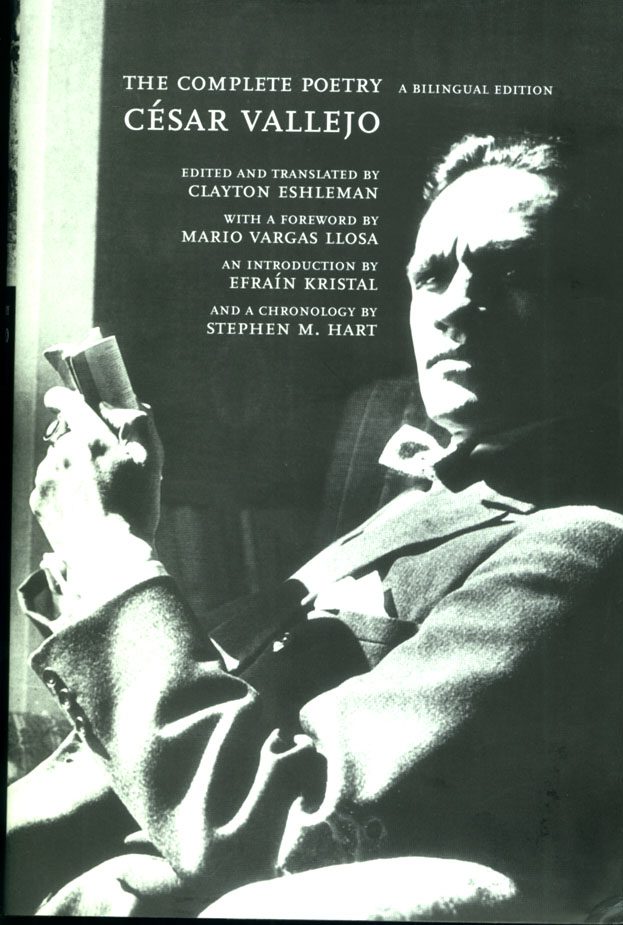
The Complete Poetry of Cesar Vallejo , first English translation by Clayton Eshleman


Clayton Eshleman, poeta y traductor norteamericano, ha venido traduciendo poemas de Vallejo desde la década del 50, cuando encontró el poema La Araña en una antología de poesía sudamericana de la editorial New Directions.

Su trabajo de traducción de Poemas Humanos le valió el importantísimo National Book Award en 1979.

Eshleman presentó ayer, en el auditorio del Instituto Cervantes en New York, la elegante edición bilingüe de esta PRIMERA TRADUCCION AL INGLES DE LA POESIA COMPLETA DE VALLEJO.

Es increíble que haya pasado tanto tiempo, pero por fin hay una poesía completa de Vallejo en inglés. Además, cuenta con un emotivo prólogo de Mario Vargas Llosa.

Eshleman leyó en inglés y la poeta mexicana Mónica de la Torre (PhD. Columbia University) leyó en español. La lectura en inglés fue muy intensa.

Eshleman, leyó 4 poemas de Los Heraldos Negros, cuatro de Trilce, 4 de Poemas Humanos y 2 de España aparta de mi este cáliz.

Pude grabar un fragmento de la lectura, El poema LVII de Trilce:

LVII
The highest points craterized, the points
of love, of capital being, I drink, I fast, I ab-
sorb heroin for the sorrow, for the languid
throb and against all correction.

Can I say that they’ve betrayed us? No.
That all were good? Neither. But
good will exist there, no doubt,
and above all, being so.

And so what who loves himself so! I seek myself
in my own design which was to be a work
of mine, in vain: nothing managed to be free.

And yet, who pushes me.
I bet I don’t dare shut the fifth window.
And the role of loving oneself and persisting, close to the
hours and to what is undue.

And this and that.

LVII
Craterizados los puntos más altos, los puntos
del amor, de ser mayúsculo, bebo, ayuno ab-
sorbo heroína para la pena, para el latido
lacio y contra toda corrección.

¿Puedo decir que nos han traicionado? No.
¿Que fueron todos buenos? Tampoco. Pero
allí está una buena voluntad, sin duda,
y sobre todo, el ser así

Y qué quien se ame mucho¡ Yo me busco
en mi propio designio que debió ser obra
mía, en vano: nada alcanzó a ser libre.

Y sin embargo, quién me empuja.
A que no me atrevo a cerrar la quinta ventana.
Y el papel de amarse y persistir, junto a las
horas y a lo indebido.

Y el éste y el aquél.

Madama Butterfly, Metropolitan Opera


La nueva puesta en escena de Madama Butterfly en el Met de Lincoln Center es fabulosa. El primer acto es demasiado largo (lei en el programa que a Puccini le hicieron la misma critica) pero el segundo acto es magnifico, lleno de eventos. El final es espectacular. A la mitad de la primera parte del segundo acto, escuché mocos a mi costado. Moqueos a mi otro costado, en el asiento de adelante, atrás mío. Parecía que la mitad del teatro estaba llorando. Hacia el final, poco antes que Butterfly se haga hara-kiri, el llanto era general. De reojo vi que Enrica sacaba su cajita de Kleenex (para exagerados, los peruanos). Pero me sorprendí a mi mismo, mirando con la boca abierta la ultima escena en la cual Butterfly se mata y entran los demonios (bueno, personajes disfrazados de negro) y empiezan a estirar interminables lonjas de terciopelo rojo que cubren todo el escenario, mientras en segundo plano, como si se tratase del borde de una colina, con el cielo anaranjado del atardecer, el capitan Pinkerton grita «¡Butterfly!» y al verla a la japonesita en el suelo ensangrentada, se desmaya. ¡Un dramón de aquellos! Excelente actuación de la soprano chilena Cristina Gallardo-Domâs, que hizo el papel de Cio-Cio San (Butterfly). Y la dirección de Minghella (El paciente inglés) quien aportó la brillante idea de usar marionetas a la usanza japonesa (operarios a ambos lados del muñeco, en lugar de cables).

Juicio a George W. Bush


Ayer hasta muy tarde, seguí los resultados de las elecciones en los EEUU. En Nueva York, la senadora Hillary Clinton, derrotó a los republicanos por tercera vez (70%-30%) y se quedó con una de las sillas del senado. Spitzer, el terror de los especuladores del mercado financiero neoyorquino, fue elegido gobernador del estado de NY, en vez del republicano George Pataki (que quiere lanzarse a la carrera como presidente). Y la cámara de diputados (the House) pasó a manos de los demócratas. El senado estaría también por pasar a manos de los demócratas pero hay una carrera muy ajustada en los estados de Virginia y Montana. Los candidatos demócratas en Virginia y en Montana ya se han declarado ganadores, pero los republicanos no han concedido la victoria y la cuenta está demasiado ajustada para estar seguros. Es la primera vez en 12 años que el partido demócrata toma el control de la cámara de diputados.
¿Qué se puede esperar de la victoria demócrata? Primero, que se de una solución final al problema migratorio. Sea una amnistía o el programa de empleo temporal propuesto por Bush. Segundo, que se aumente el salario mínimo que no se ha incrementado en diez años. Las bases demócratas van a pedir la salida de las tropas de Irak y los más radicales van a pedir un juicio (impeachment) a George W. Bush para que deje vacante la presidencia. Estas dos últimas propuestas es posible que no prosperen, pero de tomar el control del senado, es muy probable que los demócratas se aseguren de convertir la vida del preseidente Bush en un infierno.
La asitencia a las urnas fue masiva, comparable a la de las elecciones presidenciales del 2004. Aquí el voto no es obligatorio y generalmente en las elecciones de medio período la asistencia no es numerosa. Se interpreta esto como un deseo del pueblo por demostrar con su voto su rechazo al gobierno de Bush, por un rechazo a la corrupción en el Congreso y al modo como se está desarrollando la guerra en Irak.
ULTIMO MINUTO¡¡¡¡ Demócratas ganaron en Montana. Ahora el senado está 50-50. Sólo queda decidir si los demócratas ganaron Virginia.

¡Adiós!…a la española


Mochileando por Europa aprendí muchas cosas, pero una de las más sorprendentes fue la lección que recibí de mi amiga, compañera de viajes y casi hermana, la escritora Rossana «Roca» Díaz. Ella me enseñó que «las españolas están todas locas». A todas les falta una tuerca, algún tornillo, se les ha reventado un fusible o les cayó un balde de agua en los transistores. Difícil de creer, porque las españolas son SIMPATIQUISIMAS. Un amor de lindas, casi casi latinas en todo. Pero si las conoces mejor, si las tratas, si sales con ellas, poco a poco te das cuenta, aprendes, que lo que me enseñó Roquita, tiene bastante de verdad. Después de la llegada de la gallega Doda, como un ventarrón, una noche genial de conversa y paseo por Manhattan y despedida con promesa incumplida de listín cinematográfico, correspondencia y regreso a Nueva York. Después de la llegada en viaje relámpago de Patrizia, valenciana rastawoman y surferita, mochilera, pintora y fotógrafa, que llegó cargada de besos gordos en la maleta y se fue en silencio, estresada y sin siquiera decir adiós. Y conforme escribo esto me voy acordando de otras historias. Historias de españolas simpatiquísimas (Bueno, TODAS son simpatiquísimas. Que tire la primera piedra el que conozca a una española que no lo sea) pero siempre haciéndose un mundo de complicaciones, de una manera definitivamente NO LATINA. Y no vale que siempre te repitan que cuando las españolas se entregan , se entregan con todo, porque aquello solo sirve para aclarar un pequeño porcentaje de las 50 dudas que te deja una española. ¿Serán interesantes porque son más complicadas? ¿Serían más interesantes si no lo fueran? Tal vez ni siquiera hay que preocuparse por tratar de entenderlas, se debe disfrutar de los buenos momentos, de sus hermosas sonrisas, de sus rollos . Escucho ahora una canción de Sabina y entiendo mucho mejor de donde salen las historias de su letras. Las españolas son adorables, aunque estén todas locas.

Daniel Alarcón: Un peruano en el New Yorker


Hace dos años leí una de las mejores historias que he visto publicadas en la revista The New Yorker: City of Clowns, del peruano Daniel Alarcón. Lo conocí cuando vino a presentar su primer libro de relatos, War by Candlelight. Una excelente persona, muy sencillo, con los pies bien puestos sobre la tierra. Gracias a su recomendación leí un excelente libro de Kapuscinski , The Soccer War.
Esta noche, llegando de la universidad, recibí mi primer número del New Yoker luego de renovar mi suscripción anual y encontré una grata sorpresa: República y Grau, otro relato de Alarcón que se prepara a lanzar en febrero su primera novela.
Acá dejo un extracto de la historia. Si quieren seguir leyéndola solo tienen que hacer click en el enlace al The New Yorker. Busquen en la sección Fiction, allí sale publicada la historia completa.

REPÚBLICA AND GRAU
by DANIEL ALARCÓN
Issue of 2006-10-30
Posted 2006-10-23

The blind man lived in a single room above bodega, on a street not so far from Maico’ house. It was up a slight hill, as was everythin in the neighborhood. There was nothing on th walls of the blind man’s room, nor was ther anywhere to sit, and so Maico stood. He wa ten years old. There was a single bed, nightstand with a radio wrapped in duct tape, washbasin. The blind man had graying hair an was much older than Maico’s father. The bo looked at his feet, and kicked together a smal mound of dust on the cement floor while hi father and the blind man spoke. The boy didn’ listen, but then no one expected him to. He wa not surprised when a tiny black spider emerge from the insignificant pile he had made. I skittered across the floor and disappeare beneath the bed. Maico raised his eyes. cobweb glittered in an upper corner. It was th room’s only decoration
His father reached out and shook the blind man’s hand. “So it’s agreed,” Maico’s father said, and the blind man nodded, and this was all.
A week later, Maico and the blind man wer in the city, at the noisy intersection o República and Grau. They had risen early on winter morning of low, leaden skies, and mad their way to the center, to this place of snarling bleating traffic, in the shadow of a great hotel The blind man carried a red-tipped cane, and h knew the route well, but once they arrived h folded the cane and left it in the grassy median His steps became tentative, and Maic understood that the pretending had begun. Th blind man’s smile disappeared, and his ja went slack
Everything there was to know Maico learned in that first hour. The lights were timed: there were three minutes of work, followed by three minutes of waiting. When the traffic stopped, the blind man put one hand on the boy’s shoulder and with the other held out his tin, and together they walked up the row of idling cars. Maico led him toward the cars with windows rolled down, and the blind man muttered helplessly as he approached each one. Maico’s only job was to steer him toward those who were likely to give, and make sure that he did not waste time on those who would not. Women driving alone were, according to the blind man, preëmptively generous, hoping, in this way, to avoid being robbed. They kept small coins in their ashtrays for just such transactions. Taxi-drivers could be counted on as well, because they were working people, and men with women always wanted to impress and might let slip a few coins to show their sensitive side. Men driving alone rarely gave, and not a moment should be squandered beside a car with tinted windows. “If they know you can’t see them,” the blind man said, “they don’t feel shame.”
“But they know you can’t see them,” Maico said.
“And that’s why you’re here.”
Maico’s mother hadn’t wanted him to work in the city, had said so the night before, but his father had bellowed and slammed a fist on the table. Of course, these gestures were hardly necessary; in truth, Maico didn’t mind the work. He even liked the pace, especially those moments when there was nothing to do but watch the endless traffic, soak in its dull roar. “Grau is the road people take to connect to the northern districts,” the blind man explained. He had the city mapped clearly in his mind. There was money to be made in the north: it was a region of people trying to better themselves. Not like the southern rich, who had forgotten where they’d come from. “It’s a generous intersection, this one,” the blind man said. “These people recognize me and love me because they have known me their entire lives. They give.”
Maico listened as well as he could above the din. Me me me—that was what he heard. The cars and the engines and the blind man; it was all one sound. Acrid fumes hung over the intersection, so toxic that after only an hour Maico could feel a bubble in his chest, and then, in his throat, something tickling.
He coughed and spat. He apologized, as his mother had taught him.
The blind man laughed. “You’ll do much worse here, boy. You’ll cough and piss and shit and it will all be the same.”
The clouds thinned out by noon, but that morning was cool and damp. The blind man kept all the money, periodically announcing how much they’d collected. It wasn’t much. Each time a coin was dropped into the tin, the blind man bowed humbly, and though he hadn’t been asked to, Maico did the same. The blind man emptied the tin into his pocket when the light changed, and warned Maico to watch out for thieves, but the boy saw only men hawking newspapers and chalkboards, women with baskets of bread or flowers or fruit, and the very density of people in the area made it seem safe. Everyone had been kind to him so far. A woman his mother’s age gave him a piece of bread with sweet potato because it was his first day. She tended to a few toddlers on the median. They were playing with a stuffed animal, taking turns tearing it to pieces. The stuffing spread across the grass in white clumps, and, when a truck rolled by, these were blown into the street.
When the blind man found out that Maico had gone to school, he bought a newspaper and had the boy read it to him. He nodded or clucked his tongue while Maico read, and the stories were so absorbing that they even missed a few lights so that he could finish them. A judge had been murdered the previous day, in broad daylight, at a restaurant not far from where they sat. An editorial defended the life of a guard dog the authorities wanted put down for having killed a thief. There would be a new President soon, and protests were planned to welcome her. Music leaked from the windows of passing cars, and Maico could hear voices at each light singing along to a dozen different melodies. When he could, he studied the blind man’s face. Unshaven and olive-skinned, with puffy cheeks. His nose was crooked and squat. He didn’t wear dark glasses as some of the blind did, and Maico guessed that the sullen sheen of the man’s useless gray eyes was part of his value as a beggar. It was a competitive area, after all, and there were others working that morning whose qualifications for the position were clearly beyond question.
Maico’s father was waiting at the door of th blind man’s room when they got back tha afternoon. He winked at Maico, and the greeted the blind man gruffly, surprising him. “The money,” he said, with no warmth in hi voice. “Let’s see it.
The blind man pulled out his key and patted the door for the lock. “Not here. Inside is better. You people with eyes are always so impatient.”
Maico stood by while they divided the take. The counting went slowly. The blind man felt each coin carefully, then announced its worth out loud. When no one contradicted him, he continued, his hands moving with elegant assurance, organizing the money into piles on the bed. A few times, he misidentified a coin, but Maico felt certain that this was by design. The third time it happened, Maico’s father sighed. “I’ll count,” he said, but the blind man would have none of it.
“That wouldn’t be fair, now, would it?”
When the counting was done, Maico and his father walked home in silence. It had taken longer than they’d expected, and Maico’s father was in a hurry. When his mother asked how it had gone, his father sneered and said that there was no money. Or none worth mentioning. He prepared for his night shift while the boy and his mother ate dinner.
The second day, it was the same, but on the third, when they walked down the hill, Maico’s father took the boy to the market and bought sodas for them both. An old gentleman with thick, calloused hands served them. Maico drank his soda through a straw. His father asked him how the work was, whether he liked it. By now, Maico was old enough to know that he should not say too much. He’d learned this from his mother.
Did he like downtown?
He did.

Crea un blog o una web gratis con WordPress.com.

Subir ↑